Back Pain Relief Toronto: 12-Week Recovery Plan + Exercises
Back Pain: Causes, Symptoms, Treatment and Exercises — A comprehensive Toronto guide for relief, clarity, and a 12‑week plan
Spend 10 minutes to get calm next steps—whet her this is a new flare‑up, recurring ache, or sciatica. We map symptoms to meaning, share what works, and outline a 12‑week plan. Skim sections below. Same‑day help available.
When your back hijacks an ordinary Toronto day
7:30 a.m., you lean to tie your shoes and a sharp, breath‑holding zing grabs your lower back. Standing helps, but now every bend feels risky. You wonder, is this a disc or just angry muscles? Either way, your morning just changed.
On the TTC, a sudden stop makes your leg light up—tingle from butt to calf—and you grab the pole harder. At the office, the 45‑minute meeting turns into a fidgetathon, relief only when you stand. Why is this so common here? What should you do today versus later?
💡Quick Note
Severe pain, new weakness, numbness, or bowel/bladder changes? Skip to the red flags section below for urgent steps.
Why modern life fuels back pain
If you’re not in the red‑flag group, the next question is why backs flare so often. It’s a perfect storm: long sitting, high stress, and short sleep on repeat, plus gradual deconditioning (lost strength and endurance). It adds up. In office‑heavy Canadian work patterns, many of us sit 6–10 hours most days. No surprise up to 8 in 10 people experience low back pain at some point.
Here’s how everyday habits and occasional spikes quietly sensitize your back over time—think laptop on the couch or sprinting for the subway.
- Prolonged sitting compresses discs and fatigues postural muscles
- Low movement variety limits tissue resilience and load-sharing
- Poor sleep and high stress heighten pain sensitivity
- Deconditioning reduces tolerance for everyday tasks
- Occasional heavy lifts or awkward twists exceed tissue capacity
The good news: backs are robust; most calm down when capacity matches demand. Next, let’s map your symptoms to likely patterns and urgency.
Map your symptoms to likely causes and first steps
Wondering what your pattern means? As promised, here’s a map: common patterns, what aggravates or eases them, what they often indicate, and first steps. It’s a guide, not a diagnosis. If you’re unsure, we can confirm with a same‑day assessment.
Dull ache across the low back
This tends to show up after long sitting or bending to pick things up. It usually points to mechanical strain or sensitivity in the facet joints (the small joints of the spine). First steps: take short walks, do gentle mobility, and change positions often rather than staying locked in one posture.
Pain worse when arching or leaning backward
If prolonged standing, overhead reaching, or repeated extension winds things up, the driver is often facet joint irritation or posterior compression. First steps: find flexion relief, sit briefly, try knees‑to‑chest, and unload the back for a bit.
Pain worse with bending and prolonged sitting
When bending and long sits aggravate you, and a cough or sneeze causes a sharp spike, that pattern often points to disc irritation or a shallow bulge/herniation. First steps: try an elbow prop or gentle press‑ups, and take short, frequent walks.
Leg pain, tingling, or numbness below the knee
Symptoms that travel below the knee and get worse with sitting, coughing, or sneezing often point to radiculopathy (nerve root irritation or compression). First steps: find the direction that eases symptoms, protect your strength, and seek an assessment soon.
Back and buttock pain eased by sitting or leaning
When walking or standing in one spot brings symptoms on, but sitting or leaning forward relieves them, that's a common spinal stenosis (narrowing) pattern, especially in older adults. First steps: walk with a slight forward lean, use intervals, and take forward‑lean breaks.
Morning stiffness that eases once you get moving
Stiffness that loosens as the day goes on, with flare‑ups after heavy tasks or busy days, often reflects degenerative changes (arthritis) or facet irritation. First steps: use gradual loading, pace yourself, and start the day with a daily mobility warm‑up.
⚠️ Red flags—seek urgent care now
See urgent care now if you notice any of the following: New loss of bowel or bladder control; Numbness in the saddle area (inner thighs/genitals); Progressive leg weakness, tripping, or foot drop; Unexplained weight loss, fever, or night sweats with back pain; Major trauma (fall, crash) with severe pain; History of cancer with new, severe back pain. These warning signs are uncommon but important. If they appear, go to the emergency department, call 911, or visit urgent care. If you’re unsure, contact your physician or urgent care.
Why back pain lingers and flares again
Most setbacks aren’t bad luck—they’re patterns we can change. Watch for these missteps that keep people sore longer than necessary.
- Complete rest beyond 24–48 hours deconditions tissue
- Random stretches that poke your sensitive direction
- Chasing scans and pictures when results rarely change care
- Only using pain meds without rebuilding strength and tolerance
- Jumping back to max loads or long days too fast
- Ignoring sleep, stress, and pacing between tasks
A staged, active plan that fits your pattern beats guessing. Next, we’ll walk you through an evidence‑based roadmap—education, load management, targeted exercise, and supportive treatments—so you build capacity week by week without flare roulette.
What’s causing it, in plain English
Mechanical strain or sprain
Before we start the week‑by‑week plan, a quick why. Strain means muscle/tendon overload; sprain means a stretched ligament—usually from a spike in demand (first spring shovel, weekend move). It’s sore, stiff, and movement‑sensitive but usually not tingling down the leg. Expect improvement over 2–6 weeks with active rest: short walks, positions of relief, and a graded exercise build for hips and core.
Facet joint pain
Facet joints are the small sliders at the back of each vertebra (they guide motion). When irritated, arching backward, standing long, or overhead reaching can pinch, creating a localized ache—often one‑sided—with occasional referral to the buttock or hip. Calm it with flexion‑biased relief: brief sitting, knees‑to‑chest, gentle cycling, and short walks. Avoid repeated backbends for a week while we restore hip mobility and core endurance.
Disc bulge or herniation
Discs are cushions with a tough ring (annulus) and a gel‑like center (nucleus). Irritation or a small herniation can inflame a nearby nerve, causing back pain plus leg tingling, zings, or numbness. Hallmarks: worse with sitting/bending; coughs or sneezes spike. Early plan: find positions of relief, try prone on elbows or gentle press‑ups if symptoms centralize, and take short, frequent walks. Limit long sits for now. New or progressive weakness needs prompt assessment.
Spinal stenosis
Stenosis means narrowing of the canal (the tunnel for the spinal cord) or foramina (side openings for nerves), often age‑related. The pattern: standing or walking brings heaviness or aching in the back/legs, while sitting or leaning forward eases it. Strategy: interval walks with a slight forward lean, grocery‑cart posture, or a hiking pole; gentle flexion breaks; and hip/glute strengthening. Many people steadily improve capacity with this approach.
Degenerative change and arthritis
Age‑related changes in discs and joints are like wrinkles on the inside—common, not doom. During flares, stiffness and lower load tolerance show up, especially morning or after long sits. What helps most is progressive loading: daily mobility, core endurance, and hip strength, plus pacing to avoid boom‑bust days. Imaging often shows “changes” even in pain‑free people, so we match care to your function, not the picture.
Spondylolisthesis (vertebra slip)
Spondylolisthesis means a forward slip of one vertebra, often linked to repetitive extension (gymnastics, dance) or a past stress fracture. Many cases are stable and respond to graded stabilization: core endurance, hip strength, and technique tweaks to reduce repeated backbends. We may use a short‑term brace during painful spikes. Red‑flag signs or persistent function loss trigger medical review. Next, we’ll zoom in on sciatica and nerve pain.
Sciatica vs. radiculopathy, in plain English
As promised, let’s zoom in on sciatica and nerve pain. Sciatica is the leg pain pattern; radiculopathy means the nerve root in your lower back is irritated or compressed. Irritation is chemical inflammation that sparks burning, shooting, tingling, or numb patches. Compression is physical pressure that can also reduce strength or reflexes. You might feel an electric line from butt to calf when you sit, then relief after a short walk. Directional preference simply means some movements make symptoms retreat toward the spine—centralization—which is a good sign. Even if the pain sits in your leg, the driver is almost always in your back, so we calm the source and protect the nerve. It’s fixable.
So how do you nudge it in the right direction? If bending and sitting ramp it up, try prone on elbows or gentle press‑ups, 10 reps every hour, as long as leg pain centralizes. If arching hurts but leaning forward eases, use a grocery‑cart posture for walks and add knees‑to‑chest breaks. Short, frequent walks beat long rests, and gentle nerve glides (slow ankle pumps with the knee partly bent) help the nerve move without aggravation. Escalate quickly if you notice progressive weakness, foot drop, or new numbness you can’t shake. With a steady, graded plan, most nerve‑related flares improve in 6–12 weeks. We guide the pace so you protect strength while pain settles.
Want a step‑by‑step plan and quick booking? Explore our sciatica treatment Toronto resource for strategies, same‑day assessment options, and a calm path back to strength.
Pregnancy and Postpartum Back Pain, Safely Managed
Those nerve strategies still apply—if you’re pregnant or newly postpartum, we simply tailor them to your changing body. Why the extra ache? Hormonal laxity (looser ligaments from relaxin), posture shifts as your bump grows, and short, broken sleep all sensitize tissues. The fix is movement that feels safe: side‑lying positions, hip‑glute strength, core endurance you can breathe through, and pelvic‑floor‑informed cueing. We also adjust your ergonomics—pillows, SI joint (sacroiliac) belts, stroller and workstation setup—so daily tasks stop poking the sore spot. You’re safe to move.
Want trimester‑specific strategies and easy booking? Explore our
pregnancy rehab downtown Toronto; we’ll tailor care for each stage and help you start safely.
Your integrated back pain plan
Whether you’re pregnant, postpartum, or desk‑bound, you asked for a clear plan—here it is. We start with a careful history, directional testing (which way eases symptoms), load tolerance checks (sit, stand, walk), a brief neuro screen (strength, sensation, reflexes), and your goals. Then we explain it in plain English and choose next steps together. Expect two takeaways in visit one: your easing direction plus 2–3 starter exercises, with pacing rules to avoid flare roulette.
Active care is our backbone, led by physiotherapy—assessment, education, and graded loading that rebuilds capacity. If you’re ready to start, book
physiotherapy Toronto and we’ll tailor your plan around your easing direction, work demands, and goals.
Hands-on care helps when pain is guarding movement or a segment feels stuck. Gentle joint mobilizations, soft‑tissue work, and nerve glides can reduce sensitivity so exercise lands better. If that sounds like you, we can add manual therapy Toronto briefly while we build strength and tolerance.
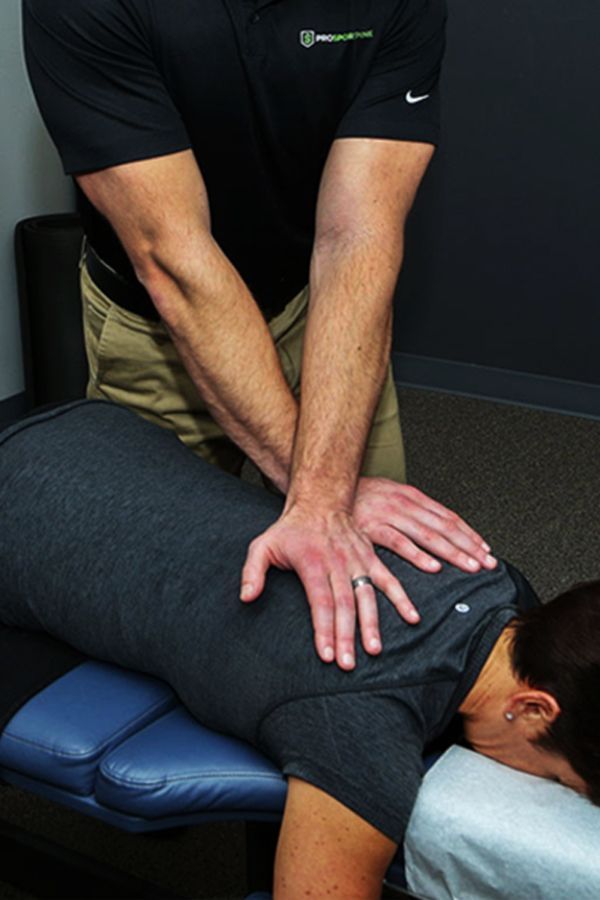
Some clients benefit from HVLA (high‑velocity, low‑amplitude) spinal adjustments—quick, precise thrusts that improve motion. Good candidates lack red flags, prefer this style, and feel stiff rather than inflamed leg pain. We always discuss options and get consent first. Learn how we approach
spinal manipulation Toronto and when we recommend alternatives.
Your exercise plan starts with motor control (coordination of deep stabilizers), then strength (hips, core), then capacity (tolerance to daily and sport loads). We progress sets, tempo, and complexity week by week. Explore our approach to therapeutic exercise downtown Toronto —you’ll leave with clear reps, dosages, and a progression map.
Our chiropractors work alongside physios and massage therapists on one shared plan—great for combining adjustments with exercise and education. Prefer to start here? Book with our chiropractor downtown Toronto. We’ll screen for safety, set expectations, and make sure every treatment supports your 12‑week roadmap.
Your 12‑week recovery roadmap
We said every treatment supports a 12‑week roadmap—here’s exactly how it unfolds. Four phases with goals, in‑clinic focus, and at‑home actions. Timelines are typical; your pace may shift a week or two.
Weeks 0-2
The goal early on is to settle pain, reduce irritability, and find your easing direction. In the clinic, that means a thorough assessment, plenty of education, pain relief, and gentle manual therapy. At home: short walks, movement in your easing direction, and steps to optimize sleep.
Weeks 2-6
Now we work to restore motion, control, and baseline tolerance. Clinic sessions progress your exercises with graded loading and technique coaching. At home, you'll add daily core work, take regular posture breaks, and pace your activity so you don't spike symptoms.
Weeks 6-10
This phase builds strength, capacity, and confidence. In the clinic we move to heavier loading, return‑to‑task training, and flare planning. At home, aim for strength work 2-3 times per week plus hip hinge and lift practice.
Weeks 10-12+
The final phase is about returning to your sport or work demands without spikes. Clinic focus shifts to sport‑ or job‑specific progressions and readiness testing. At home, rehearse your real‑world tasks and plan deload/reload cycles to keep progress steady.
Pushing for a 10K, heavy lifts, or league play? Book a consult with our sports chiropractor downtown Toronto to tailor drills and monitor load. Next: the best exercises matched to your pattern.
Now, pick exercises matched to your pattern
Work in a comfortable range, not pain. Move slowly, breathe through each rep. Do 2–3 sets of 8–15. Stop if symptoms spread below the knee or climb beyond mild.
Start with three core control moves that build stability without poking your sore spot.
- Dead Bug: Ribs down, gentle exhale, flatten low back lightly. Alternate arm and opposite leg without arching. Slow, crisp reps.
- Bird Dog: Long spine, chin tucked. Reach heel back and hand forward. Keep hips level—no trunk rotation. Pause, then switch sides smoothly.
- Side Plank (knees or feet): Stack ribs over hips, lift gently, and breathe. Hold 10–30 seconds. Progress from knees to feet as control improves.
Choose extension if bending and sitting aggravate; choose flexion if arching or long standing hurts. Use the option that centralizes pain toward your back.
- Extension bias: Prone press-ups (Baby Cobra), elbows under shoulders, relax low back. Gently straighten arms as tolerated, 5–10 reps, stopping before pain pushes into the leg.
- Flexion bias: Double Knees-to-Chest. On your back, hug both knees, comfortable range only. Hold 20–30 seconds, 2–3 reps. Breathe; stop if symptoms travel further down.
Tight hips can tug on your back. Add gentle hip mobility, then lock gains with strength. Next up: simple form cues for daily moves.
- Figure-4 Hip Stretch: Lie on back, ankle over opposite knee, pull thigh toward chest. Expect a deep glute stretch. Hold 20–30 seconds, easy breathing.
Daily movement cues that protect your back
After your Figure‑4 stretch, lock in relief with these simple technique cues for lifting, sitting, carrying, and sleeping. Use them today to avoid accidental spikes.
- Hinge, don’t bend: Push hips back, chest proud, keep the load close, and stand by driving through heels—not rounding the spine.
- Stack your ribs: Keep ribcage over pelvis, brace, move as one unit—no flaring ribs or over‑arching when you reach or lift.
- Exhale on effort: Breathe out during the hard part—stand, lift, cough—to brace lightly and avoid bearing down on spine and pelvic floor.
- Switch sides: Alternate which shoulder or hand carries bags, and swap stroller hand or toddler hip every few minutes; keep loads symmetrical.
- Micro-breaks: Stand or walk 2–3 minutes every 30–45; set a phone timer and change posture before your back asks.
- Support sleep: Side‑lie with a pillow between knees and one hugging; or supine with a pillow under knees to reduce morning stiffness.
Workstation tweaks that protect your back daily
Your sleep support is set; now lock it in at your desk. We use this Toronto‑friendly checklist—simple fixes you can do in five minutes today.
- Seat height: Thighs parallel, hips slightly above knees, feet fully grounded; use a footrest if your chair is high.
- Lumbar support: Small rolled towel or cushion to match your natural curve; keep back contact without forcing an arch.
- Screen at eye level: Top of screen at eye height; raise laptops on a stand and use an external keyboard.
- Keyboard close: Elbows near 90°, wrists neutral, shoulders relaxed; keep mouse beside keyboard—no reaching.
- Timer for breaks: Every 30–45 minutes, stand and move for 30–60 seconds; change tasks and positions.
- Walk-and-talk: Take phone calls on foot; pace the hallway or block and note steps—aim for 6,000–8,000 daily.
- Stair dose: 1–3 flights, 1–3 times daily; slow, steady pace, handrail for balance, no racing.
Self-care now vs. this week: quick relief, steady gains
Those stairs are a perfect micro‑dose of movement. Here’s what we recommend today to calm pain and build confidence safely.
- Walk short intervals: 5–10 minutes, 2–3x/day at an easy pace; stop if pain spreads below the knee.
- Directional relief: Choose the movement that eases symptoms—press‑ups for flexion‑sensitive, knees‑to‑chest for extension‑sensitive. Stop if pain travels further down the leg.
- Heat or ice for comfort: 10–15 minutes, 1–3 times/day, whichever feels better. Protect skin with a towel; never fall asleep on it.
- Sleep support: Side‑lying with a pillow between knees or on your back with one under knees; keep spine comfortable, not rigid.
Over the next seven days, build capacity gently—small, repeatable wins. Then we’ll show a real‑world example of this plan.
- Pacing: Use 20–40 minute work blocks, then 3–5 minute micro‑breaks; avoid all‑or‑nothing bursts that spike pain later.
- Capacity building: 2–3 light sessions this week—dead bug, bird dog, bridges—leave two reps in the tank, stop if symptoms spread.
- Trigger audit: Jot what spiked or soothed symptoms—time of day, position, exercise—so we can fine‑tune your plan at the first visit.
- Wind-down routine: 30–45 minutes device‑light, warm shower or heat, gentle stretch, then bed at a consistent time to boost overnight recovery.
A Toronto desk worker’s 10‑week turnaround
That wind‑down routine was the first change our composite downtown desk worker made. Challenge: three weeks of right‑sided sciatica, sit tolerance 20 minutes, walks capped at 600 metres, sleep broken. ODI (Oswestry Disability Index, a function score) 38%—moderate disruption. Bending and long meetings spiked pain; short standing eased it. Worried about an MRI (magnetic resonance imaging) he didn’t need, he wanted to know if this was fixable. It was.
Approach: Week 0–2 focused on relief and movement. Prone on elbows then gentle press‑ups centralized symptoms; two 8–10 minute walks daily; bird dog and side plank holds. We added a laptop stand, lumbar roll, and 30‑minute timers. Brief joint mobilization eased guarding so exercise landed. By week 2, ODI dropped to 26%, sit tolerance hit 40 minutes, walks 1.6 km total per day. Flares shortened to under an hour with the plan.
Weeks 6–10 built resilience: deadlifts with a hip hinge, loaded carries, step‑ups. Results: ODI 10%, sit tolerance 80–90 minutes, daily walks 3–4 km, hinge‑lift capacity from 5 kg to 22 kg without symptom spread. He returned to light basketball drills at week 9, slept through most nights, and had a prevention plan. Wondering about imaging, timelines, or costs? We answer those in the FAQs below.
Imaging, timelines, recovery: FAQs
You asked about imaging, timelines, and costs—here are quick answers. If we missed yours, call 416-975-0499 for a same‑day assessment and clear next steps.
- Do I need an MRI?: Not usually. We order imaging for red flags, major trauma, cancer history, or progressive weakness/numbness. If pain isn’t improving after 6–8 weeks of active care, we discuss MRI (magnetic resonance imaging) or medical referral.
- How long until I feel better?: Many feel relief in 1–2 weeks and steady gains by 4–6 weeks. Nerve pain can take 6–12 weeks. We track sleep, walking, and sit/stand tolerance so you see progress even before pain disappears.
- Should I stop exercising?: Modify, don’t stop. Keep short walks and low‑symptom strength work (dead bug, bird dog, bridges). Use the 3–4/10 rule—mild discomfort is okay; back off if symptoms spread down the leg or linger next day.
- Are adjustments safe?: Yes for screened patients. We rule out red flags, explain options, and obtain consent. Spinal manipulation (quick, precise thrust) can reduce stiffness, but it’s optional; we pair it with exercise and skip it when nerves are irritable.
- Will my pain come back?: Flares can happen, especially after long sits or big spikes. We reduce risk by building capacity (core, hips, walking) and giving you a flare kit: positions of relief, activity pacing, and quick tune‑up if needed.
- Is back pain different during pregnancy?: Yes, pelvic girdle and SI (sacroiliac) joint pain are common. We use pelvic‑floor‑informed physio, gentle chiropractic, massage, acupuncture, and SI belts. We coordinate with your midwife or OB (obstetrician) and adjust positions for comfort.
- Can I run or lift weights?: Yes, with a graded plan. Start with pain‑free drills: walk‑run intervals or light hinge, squat, and carry. Increase one variable at a time—distance, load, or speed—and hold gains for 7 days before progressing.
Toronto’s trusted back pain team
That graded plan you just read about works best when a coordinated team coaches each step. At Rosedale Wellness Centre, you get same-day assessments, direct billing to most insurers, and a multidisciplinary plan under one roof. Physiotherapy leads with education, load management, and targeted exercise; chiropractic, massage, acupuncture, and laser therapy are added as needed to unlock movement and settle pain. We focus on natural pain management first and reserve imaging or medical referrals for when they’ll change your care. You’ll leave visit one with positions of relief, 2–3 starter exercises, and a clear 12‑week roadmap. Downtown location, evening appointments, and virtual options keep momentum. If you want progress without guesswork, we’re ready today.
Start your recovery today
You wanted progress without guesswork—we’re ready today. An early assessment speeds recovery because we match exercises to your easing direction in week one. Same-day in-clinic or virtual visits available. Most people feel calmer after 1–2 sessions and see steady gains by week 2–4. Back on track faster.