Effective Cupping Therapy Toronto Downtown, ON
Cupping Therapy in Downtown Toronto
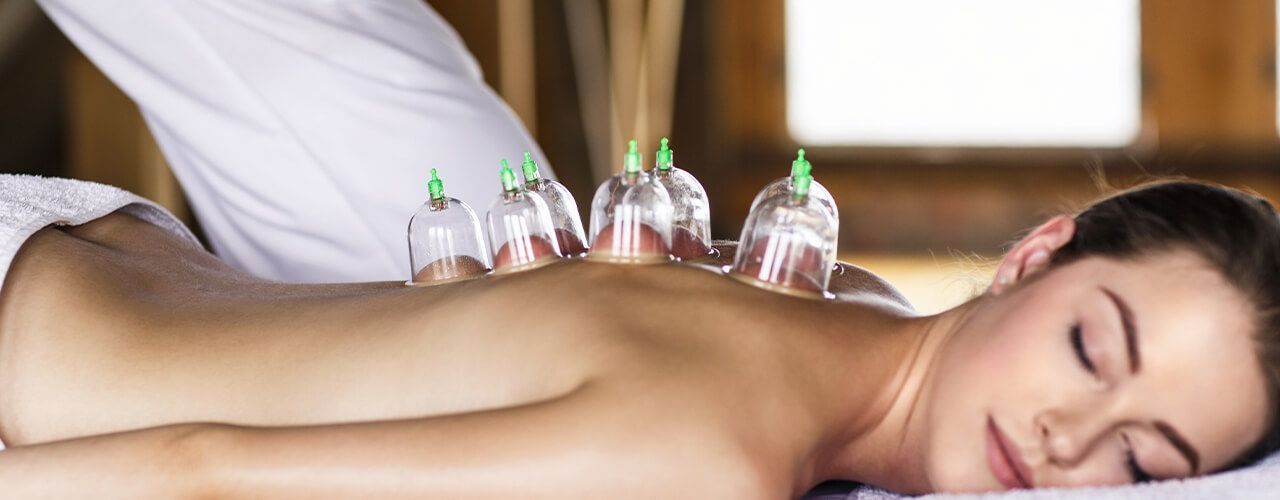
Our registered acupuncturists and licensed naturopathic doctors perform dry cupping, fire cupping and hijama (wet cupping) at Rosedale Wellness Centre, near Yorkville and Rosedale. Whether you're carrying tension between your shoulder blades from a desk job or recovering from a training block, your practitioner checks your muscles and skin before choosing which technique, and how many cups, your session needs.
Cupping often runs alongside acupuncture and traditional Chinese medicine, since both draw on the same framework for improving local circulation. For the physiology behind the suction, read what cupping does to your body.
Hijama (wet cupping) in Toronto
Hijama is wet cupping. After a few minutes of dry suction, your practitioner makes tiny, sterile micro-incisions in the skin, then reapplies the cup to draw a small amount of blood. We offer it as a distinct option from dry cupping using single-use sterile blades and proper sharps disposal for every session.
Your acupuncturist or naturopathic doctor will walk you through aftercare before you leave, since hijama needs a bit more attention to the skin than dry cupping does over the following day.
Fire cupping
Fire cupping uses a brief flame inside a glass cup to burn off oxygen and create suction, instead of a hand pump. The flame never touches your skin; it's removed before the warmed cup is placed, and the vacuum seal does the work from there.
Patients often ask for fire cupping over pump cupping for the gliding technique, where the practitioner moves the sealed cup slowly across the upper back, shoulders or hamstrings rather than leaving it stationary.
Myofascial and muscle cupping for athletes
For runners, cyclists and lifters, cupping targets the fascia around a muscle group rather than the muscle belly itself, which is why it works alongside your training block instead of replacing it. Your practitioner glides the cups along the fibre direction to release adhesions between muscle layers, then finishes with short, circular passes.
If you're managing IT band tightness, calf knots or a stiff low back from training, tell your practitioner your race or competition date. We generally schedule cupping a few days out rather than the same day, since the treated muscle can stay tender for 24 to 48 hours. If your pain is really one specific trigger point rather than broad muscle tightness, dry needling can be a better first option, and we offer both at the same clinic.
What the circular marks mean and how long they last
The circular marks cupping leaves aren't burns and aren't bruises from an injury. They show where suction pulled blood to the surface of tissue that was already tight or carrying stagnant fluid.
Lighter marks over looser tissue usually fade within two to four days. Darker, more purple marks over tighter or more congested muscle can take up to two weeks to clear, which is normal and not a sign anything went wrong. Your practitioner checks the treatment area before you leave and tells you what to expect based on how your skin reacted that day.
Who shouldn't get cupped
Cupping isn't performed over open wounds, active skin infections, burns or active inflammation, and your practitioner checks the treatment area before starting. It's also generally avoided during pregnancy, for patients on blood thinners or with a bleeding disorder, and for anyone with very low blood pressure, so a full health history is part of every intake, not an afterthought.
Rosedale Wellness Centre's naturopathic doctors are regulated by the College of Naturopaths of Ontario, and our acupuncturists by the College of Traditional Chinese Medicine Practitioners and Acupuncturists of Ontario.
Who performs your cupping session
Cupping at Rosedale Wellness Centre is performed by our registered acupuncturists, including Elizabeth Sohn and Sara Mastrangelo, and by our naturopathic doctors, including Dr. Erin Coffey, ND. Each has completed regulated training in traditional Chinese medicine or naturopathic medicine, and builds your cupping plan around what comes up in your intake rather than a fixed protocol.