

NOVEMBER 2026 · WORK & CITY LIFE
Neck and shoulder discomfort after work?
What to notice, what to try and when to book an assessment.
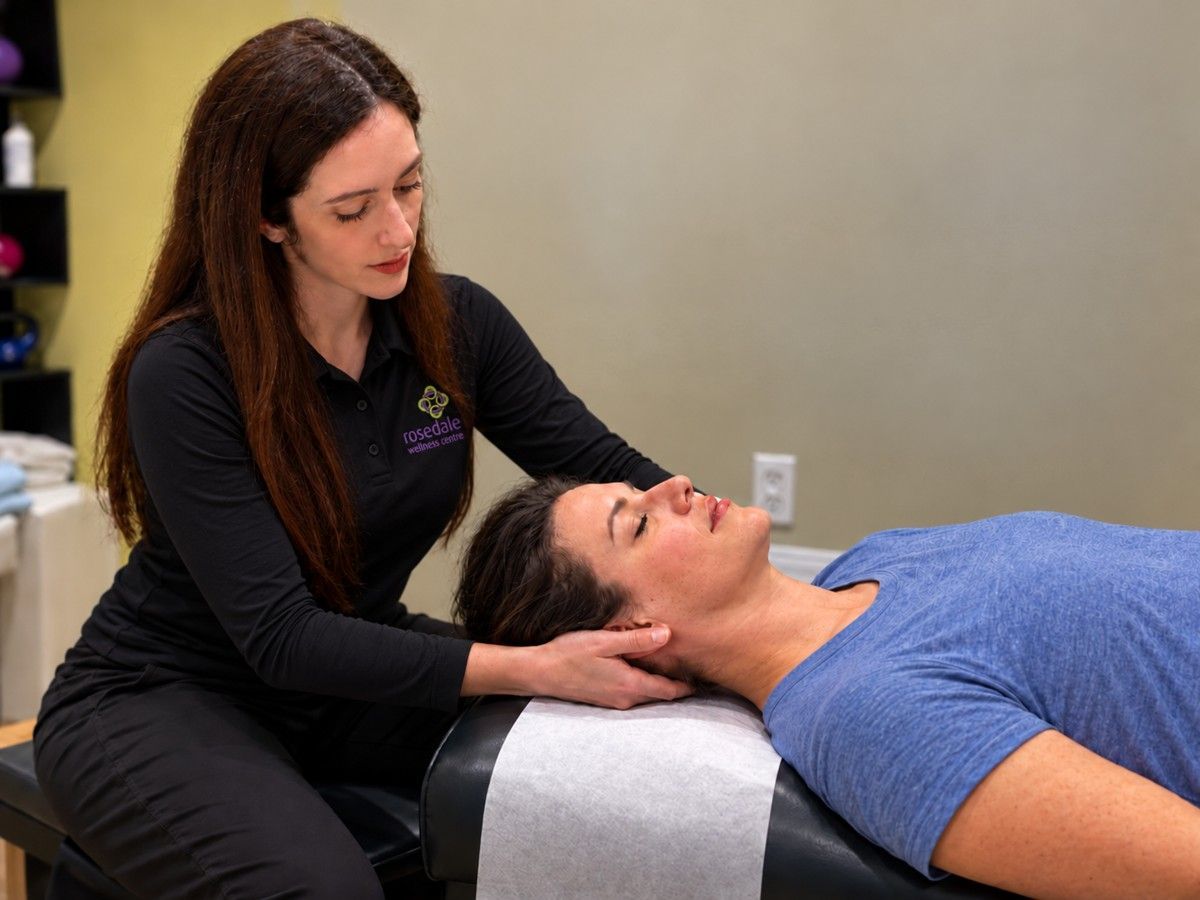
Illustrative treatment image created from reference photographs.
Rosedale Wellness Centre · 5-minute read
If your neck or shoulders regularly feel sore by the end of the workday, pay attention to when the discomfort starts. Does it build during long meetings, appear on your commute, or return when you open your laptop at home?
Book a chiropractic or physiotherapy assessment →
There is rarely one detail of the day that explains everything. How long you stay in a position, the tasks you repeat and the way you carry your belongings are all worth discussing. Changing a few habits can be a useful starting point. If symptoms keep returning, an assessment can help you understand what needs attention.
Start with the pattern
Notice what you were doing before symptoms appeared, how long they lasted and whether they affected your evening. You might be comfortable for most of the day, then feel stiff after a long call. Or you may notice discomfort while carrying your bag home.
These observations do not establish a diagnosis. They give you and your practitioner something specific to discuss. It can help to jot down a few examples rather than trying to remember an entire week during your appointment.
Change position before the day is over
Office ergonomics guidance recommends breaks away from the computer and regular changes of position. 1 If your calendar is full, use the gaps that already exist: walk to refill your water, stand comfortably between calls or leave a little space between meetings.
The goal is not to hold your shoulders back all day or stay in one supposedly ideal position. Choose a setup that lets you work comfortably and move when you need to. Before heading home, take a brief break from the screen instead of going straight from your chair to another seated journey.
Make the commute more comfortable
Check what you are carrying. If a laptop, shoes and paperwork travel back and forth every day, consider what can stay at work. Choose a bag you can handle comfortably and set it down when it is safe to do so.
On transit, use a secure handhold if you are standing and choose a supported position when a seat is available. If you drive, make seat adjustments while parked. Try a small change, then notice whether it makes the journey more comfortable. There is no single arrangement that suits everyone.
Give yourself a break when you get home
Put your work bag away and spend a few minutes doing something different before opening another screen. An easy walk or comfortable movement around your home may fit naturally into the evening.
If you need to work again, arrange your screen and keyboard so you are not reaching awkwardly, and support your arms where comfortable. Change position and take breaks. 2 Avoid forcing stretches or pushing through movements that make symptoms worse. Follow your treating clinician’s advice if you already have an exercise or rehabilitation plan.
When should you book an assessment?
Consider an assessment if discomfort keeps returning, limits your usual activities or affects what you can comfortably do after work. Tell your practitioner where you feel it, whether it travels into an arm, and what makes it better or worse.
A physiotherapist or chiropractor can discuss your history, assess relevant movement and function, and explain suitable next steps. Depending on the findings, those may include activity changes, exercises, hands-on care or referral for medical assessment. Booking an appointment does not mean you need every type of treatment.
Symptoms that need medical attention
Seek prompt medical advice for new or worsening arm numbness or weakness. Call 911 for neck or shoulder discomfort with chest pain, shortness of breath or other heart-attack symptoms, or suspected serious spinal injury. Fever with severe headache and a very stiff neck also needs urgent medical assessment. 3, 4
How Rosedale can help
Our chiropractic and physiotherapy teams can assess recurring neck, shoulder and back symptoms and discuss a plan suited to your needs. Bring your questions and a few examples of when symptoms bother you. You do not need to know the cause before booking.
If another service could be appropriate, your practitioner can explain why and discuss it with you. The starting point is understanding your concerns and what you want to return to comfortably.
AROUND ROSEDALE
Welcome to the team, Mike

Registered Massage Therapist
We’re pleased to welcome Mike to our team. He graduated from the Canadian College of Massage in 2021 and brings a caring, personalised approach to supporting people with stress-related tension, injuries and acute or chronic pain.
His techniques include Swedish massage, myofascial release, trigger point therapy, hot stone massage and decompression massage. Each treatment is tailored to your individual needs and comfort, with a focus on supporting recovery, relieving tension and overall well-being.
Interested in seeing Mike? Ask our team about appointments →
AROUND ROSEDALE · PATIENT REFERRALS
Patient referral campaign: Escape the Cold

Our Escape the Cold campaign is running until December 31. Refer a friend or family member and receive a $25 referral credit, along with an entry in the flight-voucher draw.
A $25 referral credit—and a chance to win a $1,000 flight voucher.
The more you refer, the more entries to win.
Campaign deadline: December 31.
Please contact our team for eligibility, referral-credit conditions and full contest details.
Book a chiropractic or physiotherapy assessment
Talk with our team about an assessment suited to your concerns.
Book an assessmentPrefer to call? 416-975-0499
Direct billing is available for many extended health insurance plans.
Sources & further reading
- CCOHS: Office Ergonomics—Sit/Stand Desk
- Ontario: Computer ergonomics
- HealthLink BC: Neck Pain
- MedlinePlus: Neck pain
General education, not a diagnosis or an individual treatment plan.